
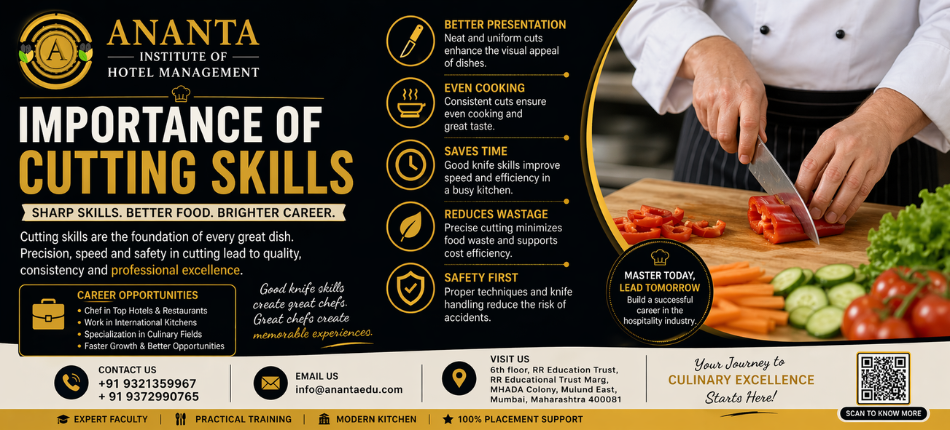
Importance of cutting skills in hotel management – Ananta Institute of Hotel Management
Introduction
In the world of hospitality and culinary arts, cutting skills are one of the most fundamental abilities every aspiring chef must master. Whether you are preparing a simple salad or a gourmet dish, the way ingredients are cut directly affects the taste, texture, and presentation. At Ananta Institute of Hotel Management, students are trained in professional knife skills to build a strong foundation for a successful career in the hotel industry.
Master the importance of cutting skills in hotel management for better speed, precision, and presentation. Learn professional knife techniques and boost your culinary career with Ananta Institute of Hotel Management.
What Are Cutting Skills in Hotel Management?
Cutting skills refer to the techniques used to slice, dice, chop, and carve ingredients with precision and efficiency. These include various styles like julienne, brunoise, chiffonade, and slicing, which are essential in professional kitchens.
Importance of Cutting Skills in Culinary Arts
1. Improves Food Presentation
Uniform cutting enhances the visual appeal of dishes, making them more attractive and professional. Presentation plays a crucial role in customer satisfaction in hotels and restaurants.
2. Ensures Even Cooking
Properly cut ingredients cook evenly, ensuring better taste and texture. Uneven cuts can lead to undercooked or overcooked food.
3. Saves Time in the Kitchen
Efficient knife skills help chefs work faster, which is critical in busy hotel kitchens where time management is essential.
4. Reduces Food Wastage
Precise cutting minimizes waste, helping kitchens maintain cost efficiency and sustainability.
Basic Cutting Techniques Every Student Must Learn
- Chopping
- Slicing
- Dicing
- Julienne (thin strips)
- Brunoise (fine dice)
Safety While Using Knives
Safety is as important as skill. Proper grip, posture, and focus are essential to avoid injuries. Students at Ananta Institute of Hotel Management are trained in safe knife handling techniques to ensure confidence and professionalism in the kitchen.
Career Benefits of Strong Cutting Skills
Strong cutting skills are a core requirement in professional kitchens and give hotel management students a clear career advantage. Precision cutting improves speed, consistency, and presentation—qualities that top hotels and restaurants value highly. Chefs who master knife skills can handle high-pressure kitchen environments efficiently, reduce food wastage, and maintain quality standards. These abilities open doors to better job roles, faster promotions, and opportunities to work in premium hotels, international kitchens, and specialized culinary fields like garde manger or fine dining.
Why Choose Ananta Institute of Hotel Management
Ananta Institute of Hotel Management stands out for its practical, industry-focused training approach that prepares students for real-world hospitality careers. The institute offers hands-on kitchen experience under expert chefs, modern infrastructure, and a curriculum aligned with current industry standards. Students benefit from personalized guidance, skill-based learning, and placement support, ensuring they are job-ready from day one. With a strong focus on discipline, professionalism, and technical expertise, the institute helps students build a successful and confident career in hotel management.
Conclusion
Cutting skills are the backbone of culinary excellence. Mastering these skills can transform a beginner into a professional chef. With expert guidance from Ananta Institute of Hotel Management, students can build a strong and successful career in hotel management.
Importance of cutting skills in hotel management Importance of cutting skills in hotel management Importance of cutting skills in hotel management Importance of cutting skills in hotel management Importance of cutting skills in hotel management Importance of cutting skills in hotel management Importance of cutting skills in hotel management Importance of cutting skills in hotel management